
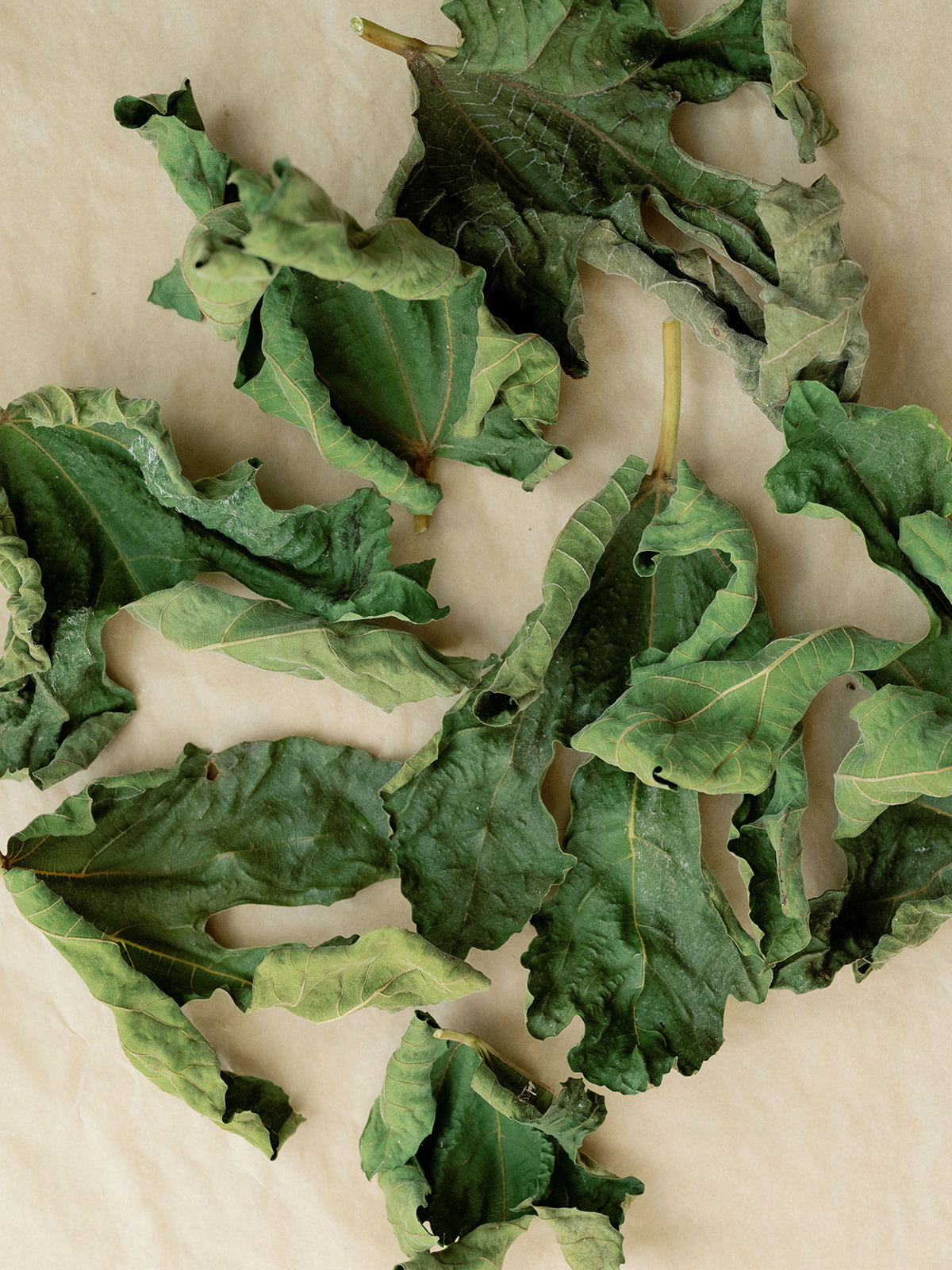

Stinging nettles were the first wild ingredient I fell for — I spent hours plucking the leaves, blanching them, working their deep green flavor into both sweet and savory cooking. Fig leaves have since become a similar love.
Their flavor is green and herbaceous, with soft notes of fig, coconut, and vanilla. I steep them into ice cream, panna cotta, and crème brûlée, blend them into oil to swirl through buttercream or drizzle over summer tomatoes. As the season begins to close, I toast the leaves and rub them into sugar, tucking it away for later.
How to use fig leaf powder and sugar Rolled on warm donuts and morning buns. Sprinkled into shortbread or sugar cookies. Folded into simple cakes.
Other ways to use fig leaves Infused into custards — ice cream, panna cotta, crème brûlée, whipped cream. Steeped into simple syrup or honey. Stirred into jam. Paired with stone fruits — cherries, apricots, peaches, plums. Used to wrap fish or baked cheeses like feta and chèvre. Added to curry or steamed rice. Blanched and blended into oil for butter


Fig Leaf Powder & Sugar
Ingredients
Instructions
Collect as many fig leaves as you can find. I like to make a big batch of powder.
Line a few baking sheets with parchment paper. Preheat the oven to 250. Wash and dry the fig leaves. Spread them out on a single layer onto the prepared sheets, it’s ok if they overlap a little but they will dry out more evenly if they are not piled on top of each other. Bake for 15-20 minutes, until the leaves are crisp and dry. They should smell toasty and fragrent. Remove the stems and blend in a spice grinder or food processor. Sift the mixture and blitz again, repeating this process 2-3 times until the powder is very fine dust. Store in an airtight container.
To make fig leaf sugar
Combine 2-3 teaspoons of powder with 1/2 cup (100g) granulated sugar.


Leave a Reply